
Sights in Cannes — 3 of Our Favourites

Discover and book the top Cannes sights

Musee Picasso

1. Musee Picasso (Chateau Grimaldi)

The Picasso museum is housed in the Chateau Grimaldi in the centre of the town of Vallauris. The chateau was built over a Roman fort in the 16th century.

Picasso lived in Vallauris from 1948 until his death in 1955. He created many works here and was instrumental in the revival of the pottery industry and arts movement of the area. Following Picasso's success the building where he had once rented a room later became a museum dedicated to him which houses 300 of his paintings.

There are also pieces by artists Léger, Miró, Chillida, Klein, Modigliani, Picabia and Calder, among many others.

The castle, on the other hand, has its origins in the 14th century, when the Grimaldi family lived here. Turned into a town hall in 1792, it was bought by the town of Antibes in 1925. Picasso used one of its rooms as a workshop, where he made paintings and drawings, many of which he gifted to the town of Antibes.
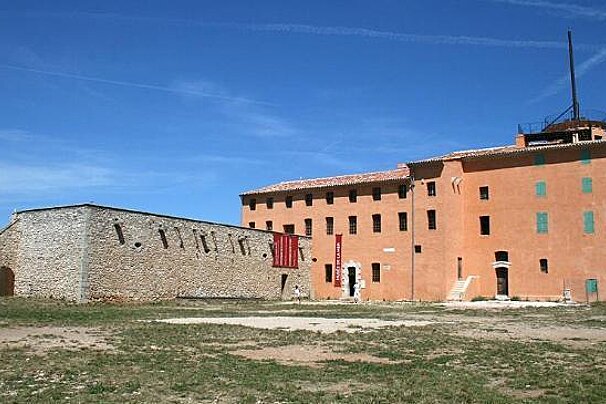
Musee de la Mer, Ile Sainte-Marguerite

2. Musee de la Mer, Ile Sainte-Marguerite

Location
Cannes

Situated within the Royal Fort on Ile Sainte-Marguerite in the Bay of Cannes, this museum is a place not only of learning but also of rich history.

This historical monument overlooks the sea and is home not only to the Musee de la Mer, but you can also visit the old state prison cell and the famous iron mask, where the mysterious prisoner was imprisoned for eleven years. In addition to this, you can see the Huguenot Memorial and murals by Jean Le Gac on the theme of the imprisoned artist.

On the first floor, you will find archaeological materials that were discovered in the sea and originate from Roman and Saracen wrecks. Tradelière Batéguier (ceramics, cargo of amphorae, glasses...) and fragments of Roman wall paintings from land excavation of Île Sainte-Marguerite are also on display. A space for temporary exhibitions opens on a wide overlooking the sea facing terrace Cannes coastline, the Southern Alps in Cap d'Antibes and the Esterel.

Fort Royal Museum, Ile Sainte-Marguerite

3. Fort Royal Museum, Ile Sainte-Marguerite

Location
Cannes

In 1617, the Duke of Guise gave Jean de Bellon the task of building a fort intended to block sea access to Cannes. Constructed between 1624 and 1627 on the site of remains that dated back to Roman antiquity, at the time it was nothing more than a simple fortified house.

These humble origins would be enhanced a few years later by the Spanish who then occupied the islands. Only two years later in 1637 the French took back possession of the island and named the fortress Fort Royal.

At the end of the seventeenth century, the fort became a state prison and continued to grow in size. The prisoners held inside the fort include most notably: the famous, but nevertheless unidentified, Man in the Iron Mask, held for 11 years from 1687 to 1698; Six protestant pastors, imprisoned following the revocation of the Edict of Nantes, from 1689 until their deaths in 1713; Jean-Baptiste Suard, who would become the eternal secretary of the French Academy, incarcerated between 1751 and 1753; The Smala d'Abd el-Kader, from 1843; 600 Austrian prisoners, detained in 1859 after the battle of Montebello; Marshall Bazaine, the only prisoner to have escaped from the Royal fort in 1873, in what legend describes as a fantastic escape and after whom a terrace of the fort is today named.