
Sights in Vence — 5 of Our Favourites

Discover and book the top Vence sights

Fondation Maeght

1. Maeght Fondation Museum, St-Paul de Vence

Location
Vence

Just outside Saint-Paul de Vence lies one of France's most famous modern and contemporary art museums. Surrounded by pleasant gardens, this is a nice place to spend your afternoon.

The gallery was created by Aime and Margueritte Maeght, who donated their personal art collection of around 9,000 items. It was opened in 1964 by André Malraux.

Catalan architect Josep Lluis Sert designed the buildings and spaces and many of the more famous artist's works were incorporated into the building and garden structure: the Giacometti courtyard, one of the world’s most famous “in-situ” works, the Miró labyrinth filled with sculptures and ceramics, the mural mosaics of Chagall and Tal Coat, Braque's pool and stained glass window, the Bury fountain. The complex blends interior and exterior space with the sculpture garden, courtyards, terraces and patios, showrooms, chapel, library and bookstore.

Paintings, sculptures, drawings, ceramics and graphic works of art all feature by notables such as Chagall, Giacometti, Leger, Braque, Kandinsky, Calder and Miro. Contemporary artists such as Adami, Kelly, Kuroda and Monony are also featured.
White Penitents Chapel (The Folon Chapel), St-Paul de Vence

2. White Penitents Chapel (The Folon Chapel), St-Paul de Vence

Location
Vence

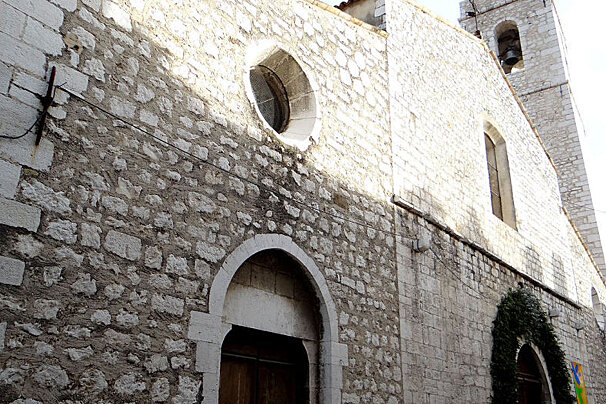
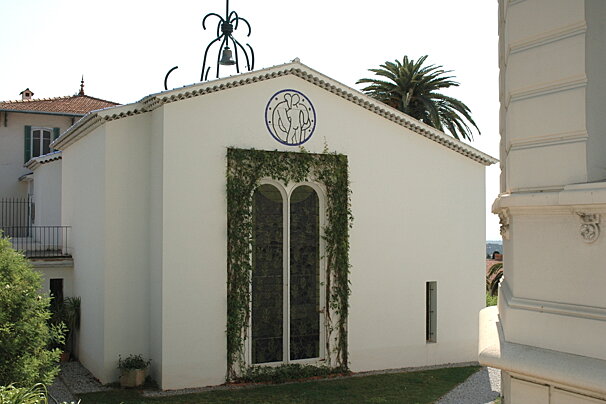
This chapel's oldest parts date from the 17th century, namely its three-sided tower. It now contains contemporary artwork made in 2005 by Jean-Michel Folon.

The first traces of the brotherhood of White Penitents in Saint-Paul de Vence date back to 1581. They formed an association of pious laymen who did good works to earn forgiveness for their sins. Their charity work with the underprivileged included caring for the sick, handing out clothing and food to the needy, and giving grain to farmers in trouble. They would also offer food and shelter to lost travellers and penniless pilgrims. The brotherhood existed in Saint-Paul de Vence until the beginning of the 1920s. This chapel was their headquarters.

In 2005, a huge project was undertaken here by Belgian artist Jean-Michel Folon to decorate the interior of the chapel in a manner which encapsulates the work of the White Penitents. On Folon's death in 2005, the work was continued by a select group of artisans. Look out for the mosaic of stained glass windows.

A stone building with a sign that says vence on it

3. Chateau de Villeneuve, Vence

Location
Vence

The château (more like a townhouse, so don't go looking for turrets) was originally built in the 17th century and was gifted to the town of Vence by Emile Hugues who had been the mayor.

The chateau was restored by architect Jean François Bodin, author of the restorations of the Modern Art Museum in Paris and the Matisse Museum in Nice.

Exhibitions of modern and contemporary art are the mainstay of this gallery and you can see works by Matisse and Chagal, who both lived in Vence for several years. There are also cultural events throughout the year, such as encounters with artists and critics, or educational workshops.

A stone building with a window and a bell tower

4. Collegiate Church (Eglise Collegiale), St-Paul de Vence

Location
Vence

This simple church was first built in the 14th century, and finished in the 18th century. It showcases a combination of structures and styles.

The central nave still features its original late Romanesque style, while the side aisles were added in the 16th century to enlarge the building. The church was raised to the condition of collegiate church in 1666, so new interior decorations were purchased such as the choir, sculpted in 1668. The chapel of Saint Clement was also built then in a rich Baroque style.

The grand bell tower dates from the 18th. The church has four chapels and a collection of antiquities which include parchment from the 16th century, a Tintoretto painting and precious jewellery.

Rosaire Chapel, Vence

5. Rosaire Chapel, Vence

Location
Vence

Matisse's Final Masterpiece, this chapel, was built in 1949 and designed in its entirety by Henri Matisse.

He created the chapel as a monument to sacred art in the world and dedicated four years of his life to the design and architecture of the building.

From the stained glass to the ceramics and furniture, the chapel was, he claimed, "the result of my working life. I consider its imperfections as my masterpiece".

The chapel was a request from a young nun named Monique Bourgeois, who had nursed Matisse back to health after he was treated for cancer in 1941.

It has a simple white exterior measuring 15 by six metres, with a roof of blue and white tiles. The brown stone alter was specifically chosen to resemble the colour and texture of bread as a nod to the Eucharist. The stained glass windows in the vibrant shades of yellow (for the sun), green (nature) and blue (sea) reflect the Mediterranean surroundings. Three murals in black and white depict St Dominic, the Virgin and Child and Stations of the Cross and were painted on 12 inch tiles before being fixed to the interior walls.

The small gift shop donates all its profits to the Dominican convent.