Religious Sights in Antibes — 10 of Our Favourites

Discover and book the top Antibes sights

Frejus Cathedral, Frejus

1. Fréjus Cathedral, Fréjus

Location
Frejus

Dating back to the 5th century when the baptistery was built makes it the oldest in the Provence region and one of the oldest in France. At this ancient, Merovingian style baptistery you can still see a 5th century baptismal basin for full immersion, as well as Roman columns.

The first bishop of Fréjus was Saint Leontinus of Fréjus who started the church here for the first time, hence it's referred to as Cathedrale Saint Leonce.

The cloisters were built between the 11th and 14th centuries: a series of pointed arches resting on double Corinthian columns surround the small patio. The ceilings are painted with beautiful small medieval images made in the second half of the 14th century. They depict the Virgin Mary and the infant Christ, Saint Peter, canons, priests, demons, angels, animals and fantastic creatures like a mermaid, a dragon or a centaur. There are also very interesting depictions of normal people, such as a butcher, a juggler or a knight.

Entry into the cloister is charged for, and if you're there on a Saturday you may be lucky enough to catch one of the many weddings that take place within the cathedral.

Abbaye de Lerins (Lerins Abbey) Monastery, Ile Sainte-Honorat

2. Abbaye de Lerins Monastery (Lerins Abbey), Ile Saint-Honorat

Location
Cannes

Located on the island of Saint Honorat, the abbey is still occupied by monks. It's possible to receive a guided tour and re-charge your spiritual batteries.

The present community of monks have inhabited the island since the arrival of the first Cistercian monks from Senanque (near Avignon) in 1869.

There are many ancient chapels surrounding the monastery, plus stunning flora and fauna for you to stroll in and around whilst you discover the beauty of the site. You can visit the historic monument of the fortified monastery and discover the ancient chapels dotted around the perimeter of the island. The island itself is maintained, cultivated and ecologically preserved. 

It's also possible to participate with the monastic community and, although there are parts not accessible to the public, the church is still open. If you want to visit for longer to really recharge, enjoy the silence, and pray... there is the opportunity to stay on the island, in the hospitality of the Abbey.

Antibes Cathedral, Antibes

3. Antibes Cathedral

Beautifully located near the sea, the cathedral in Antibes has a nice sculpted façade, and is full of artistic gems inside.

This grand neoclassical church stands in the same place as a Roman temple dedicated to Diana and Minerva, where an early medieval cathedral was built. It is also said that Saint Paul stopped here on his way to Spain in 63 AD.

Antibes was an important episcopal town from the 5th to the 13th century, when the diocese moved to Grasse, and later to Nice. The first bishop was Saint Armentaire, who consecrated the building to Saint Mary. It has been destroyed and reconstructed many times, first in 1124 after an attack by the Saracens, and then in 1608.

The current cathedral was built in 1746, after the town was bombed during the Austrian succession wars. Louis XV helped financially with the construction of the new façade. The sculpted tympanum over the door was made in 1710 by Joseph Dolle, a local sculptor, and represents Saint Roch and Saint Sebastian, protectors of Antibes.

Inside, you can see a magnificent altarpiece painted in 1515, a marble Virgin statue from the 19th century, a 15th-century wooden Christ and an organ made in 1860 by master Jungh, among many other things.

Eglise de Biot, Saint Marie Madeleine church, Biot

4. Eglise de Biot, Saint Marie Madeleine church, Biot

Location
Biot

Classified as a historic monument this 15th-century catholic church is located in the heart of the village of Biot.

The first parish church was built near the castle in the first half of the 12th-century. During the second half of the 14th-century the village was depopulated and the church destroyed in 1367. Repopulate by Genoese families in 1470, a new village church was then rebuilt, perhaps by partially reusing elements of the original one.

The side door was finished in 1506, with the main door not being completed until 1536. Side chapels were added in the second third of the 17th-century.

It is a remarkable building with many carved or painted details. It contains exceptional works of sacred art including altarpieces, such as that of the Virgin in the Rosary (16th century), attributed to Louis Brea.

The exceptional acoustics of the building make it possible to enhance concerts such as the Festival des Hours Musicales, an institution in Biot for almost 30 years and attract internationally renowned musicians.

A stone building with a window and a bell tower

5. Collegiate Church (Eglise Collegiale), St-Paul de Vence

Location
Vence

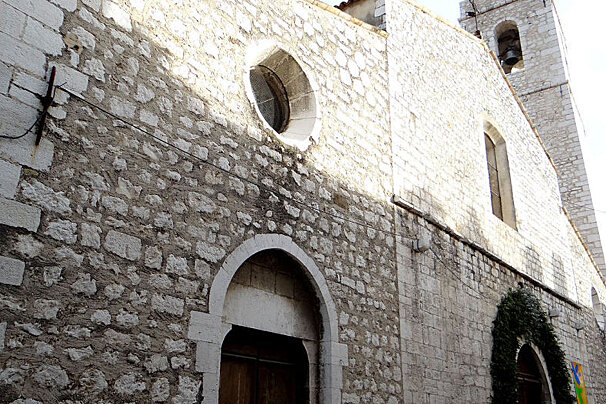
This simple church was first built in the 14th century, and finished in the 18th century. It showcases a combination of structures and styles.

The central nave still features its original late Romanesque style, while the side aisles were added in the 16th century to enlarge the building. The church was raised to the condition of collegiate church in 1666, so new interior decorations were purchased such as the choir, sculpted in 1668. The chapel of Saint Clement was also built then in a rich Baroque style.

The grand bell tower dates from the 18th. The church has four chapels and a collection of antiquities which include parchment from the 16th century, a Tintoretto painting and precious jewellery.

White Penitents Chapel (The Folon Chapel), St-Paul de Vence

6. White Penitents Chapel (The Folon Chapel), St-Paul de Vence

Location
Vence

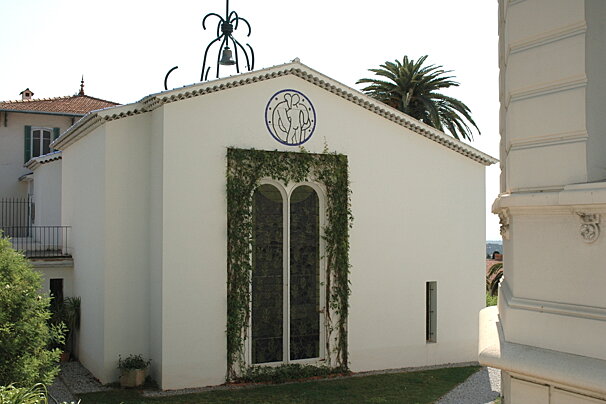
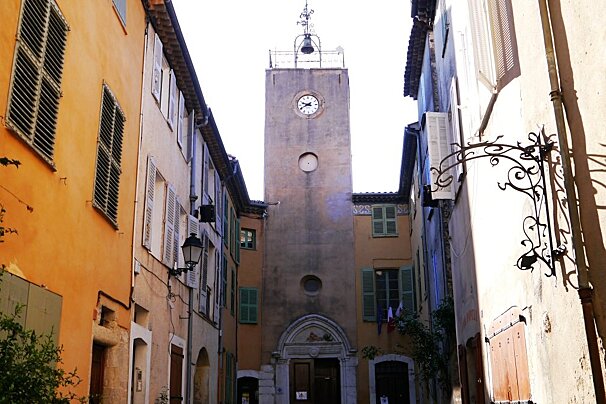
This chapel's oldest parts date from the 17th century, namely its three-sided tower. It now contains contemporary artwork made in 2005 by Jean-Michel Folon.

The first traces of the brotherhood of White Penitents in Saint-Paul de Vence date back to 1581. They formed an association of pious laymen who did good works to earn forgiveness for their sins. Their charity work with the underprivileged included caring for the sick, handing out clothing and food to the needy, and giving grain to farmers in trouble. They would also offer food and shelter to lost travellers and penniless pilgrims. The brotherhood existed in Saint-Paul de Vence until the beginning of the 1920s. This chapel was their headquarters.

In 2005, a huge project was undertaken here by Belgian artist Jean-Michel Folon to decorate the interior of the chapel in a manner which encapsulates the work of the White Penitents. On Folon's death in 2005, the work was continued by a select group of artisans. Look out for the mosaic of stained glass windows.

Abbey of Valbonne, Valbonne

7. Abbey & Church of Valbonne, Valbonne

Founded in the 13th century by monks from the Order of Chalais, the church was built between 1199 and 1230. It features minimalist architectural lines, typical of the order which reached its peak at this moment, before its decline and disappearance in 1303.

This was a small abbey, housing a maximum of 30 monks. The simple church, now a parish church, can be visited, as well as the monastery buildings, which are very well preserved, including a sacristy, chapter house, refectory, kitchen and workshop. The beautifully minimalist cloister, where remnants of the tiled roof can still be seen, also houses the monks' dormitories with narrow windows on the upper floor.

Restored in the 1970s, the image of the church was changed during the 19th century when the Romanesque southern windows were enlarged. On the northern wall, a chapel dedicated to the White Penitents was opened in the 17th century.

The second floor of the cloister houses a museum showcasing the heritage of Valbonne. Traditional jobs and domestic life are explained here.

The painted interior of Chapelle Saint Bernardin, Antibes

8. Chapelle Saint Bernardin

This Gothic church was built in Antibes in the 16th century to house the Brotherhood of the White Penitents of St. Bernardin.

It has been restored and today unveils a rich set of frescoes from the 16th and 19th century, and a magnificent wooden altarpiece of the 18th century. It was declared an Historic monument in 1989.

Admission is free and the church is open on a Tuesday, Thursday, Friday and Saturday from 09:00 to 12:00 and from 13:00 until 17:00.

Rosaire Chapel, Vence

9. Rosaire Chapel, Vence

Location
Vence

Matisse's Final Masterpiece, this chapel, was built in 1949 and designed in its entirety by Henri Matisse.

He created the chapel as a monument to sacred art in the world and dedicated four years of his life to the design and architecture of the building.

From the stained glass to the ceramics and furniture, the chapel was, he claimed, "the result of my working life. I consider its imperfections as my masterpiece".

The chapel was a request from a young nun named Monique Bourgeois, who had nursed Matisse back to health after he was treated for cancer in 1941.

It has a simple white exterior measuring 15 by six metres, with a roof of blue and white tiles. The brown stone alter was specifically chosen to resemble the colour and texture of bread as a nod to the Eucharist. The stained glass windows in the vibrant shades of yellow (for the sun), green (nature) and blue (sea) reflect the Mediterranean surroundings. Three murals in black and white depict St Dominic, the Virgin and Child and Stations of the Cross and were painted on 12 inch tiles before being fixed to the interior walls.

The small gift shop donates all its profits to the Dominican convent.

Cathedrale Notre Dame du Puy, Grasse

10. Cathedrale Notre Dame du Puy, Grasse

Location
Grasse

The medieval church of Notre-Dame du Puy was raised to cathedral status in 1244, when the bishop transferred from Antibes to Grasse.

Its Provençal Romanesque style has been well preserved throughout the centuries. In the 17th century, an exterior staircase was built, while a chapel dedicated to the Saint Sacrament was added in 1740, in a beautiful Baroque style.

The cathedral’s strict, basic style, structure, vaults, and discreet décor reflect Lombardian and Ligurian influences. It shelters works by such masters as Rubens, Charles Nègre, a beautiful triptych by Louis Bréa, and the only religious painting by Jean-Honoré Fragonard, Le Lavement des Pieds (The Washing of the Feet).